
Thinking in Two Languages: Inside a First Grade Robotics Lesson at Ventana Vista
Posted Date: 05/14/26 (05:00 PM)
 "How are robots helping humans explore the natural world?"
The driving question of the unit is on the board, and the class recites it together: "How are robots helping humans explore the natural world?" Over the past few weeks, Mr. Mickey-Colman's students have built a series of robots designed to help humans explore the natural world. Today, they are taking on the ocean.
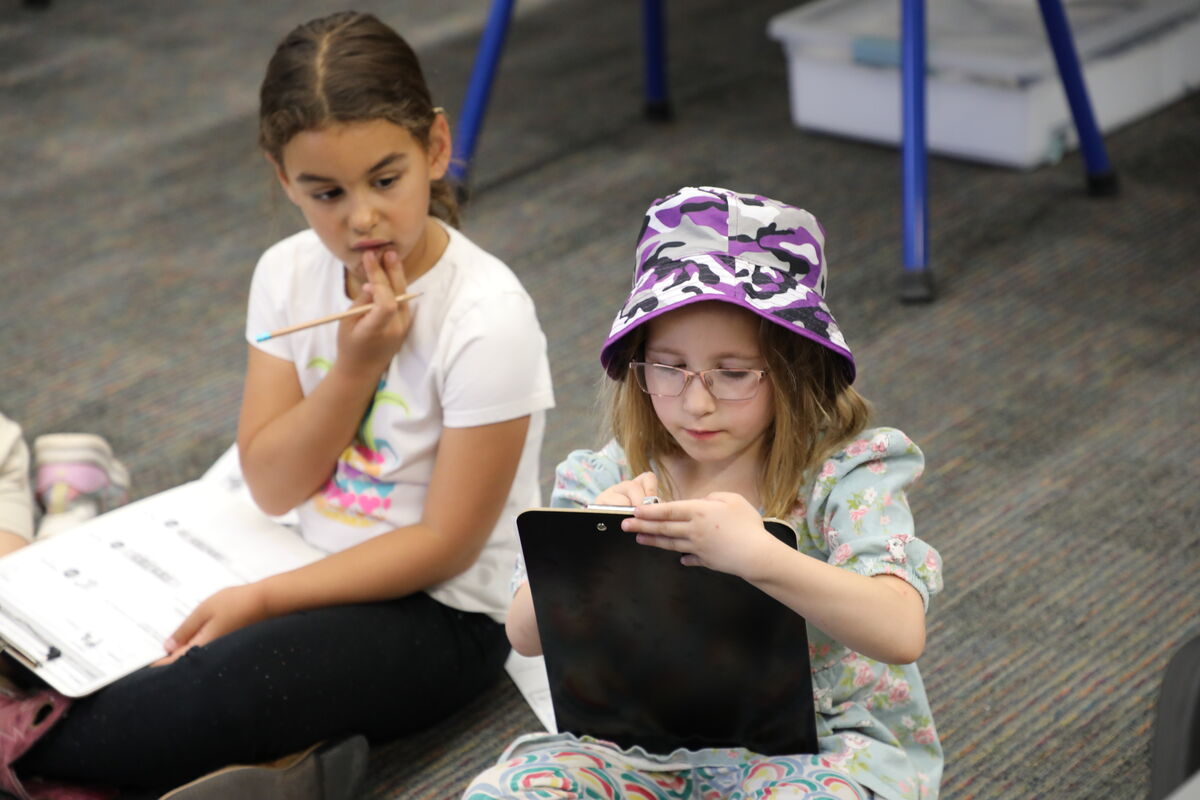
Students began the lesson by thinking about the problem using paper and pencil.
Today's Mission: Build and Program a Submarine
The lesson opens with a problem to solve. Maria, the character whose adventures have been driving the unit, wants to explore the ocean, but humans can't stay underwater for very long. "We can't breathe in the water," one student offers. Another mentions the pressure on your ears when you dive deep in a pool. The class agrees that what Maria needs is a submarine.Two learning goals go on the board:
- I can build a robot and a program using code.
- I can look and listen to my partner to be a supportive team member. Mirar a mi compañero.
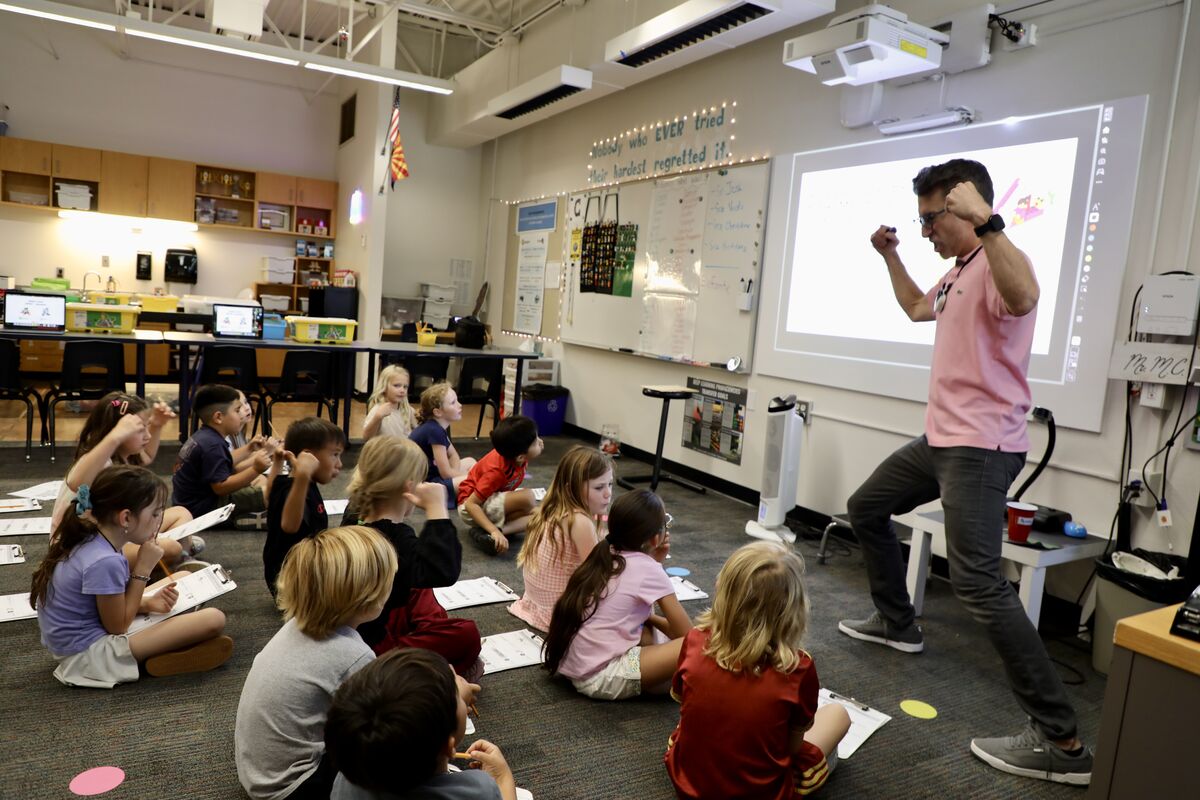
Mr. M-C reminds students that they are strong and can solve hard problems.
Real Coding, in Plain Language
What happens next is striking. These are first graders, and they are learning to read and write code.Working in pairs at their tables, students use the LEGO SPIKE Essential platform to build a small submarine and then program it. Mr. M-C walks the class through each block of code on the projector. A motor block set to 0.5 turns the motor halfway, "like a clock from 12 to 6," he explains. A block set to 0.25 turns it a quarter of the way. A loop block, marked with a circular arrow, makes the program repeat. "Three times," one student calls out, when asked how many times the loop will run.
Their first program sends the submarine down into the Sunlit zone, makes an ocean sound, swishes back and forth three times to explore, and then returns to the surface. Their second program adds a color sensor and a hand-built giant squid. When the submarine senses the squid in the Twilight zone, the program kicks off and the sub launches into action.
These are real computer science concepts: sequencing, parameters, conditionals, and loops. The students are using them confidently, and they are explaining them to each other and to their teacher in their own words.
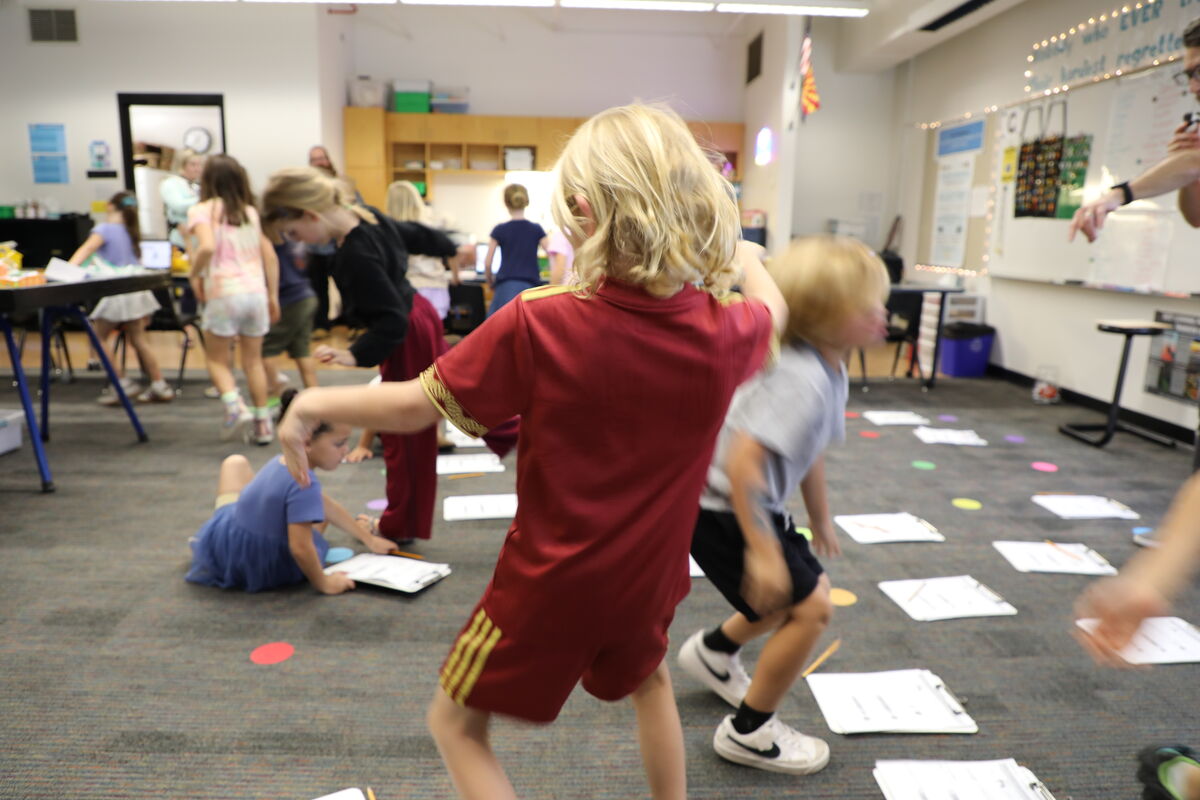
Students are challenged to move like a pulpo to their mesas.
Two Languages, One Lesson
This is where the lesson becomes something different from a typical first grade robotics class. Ventana Vista is a Spanish immersion school, and Mr. M-C uses both English and Spanish in his teaching.Students label their work with their nombre and the name of their compañero. They take tomar turnos. They work at their mesa with their compañero. The classroom routines, the transitions, the social vocabulary, the goal-setting, and the directions all move fluidly between English and Spanish. When Mr. M-C wants the class to move from the rug back to their tables, he uses a "magic word" in Spanish. Today's word is pulpo. Yesterday's was elefante. The week before, lupa. The students hear, recognize, and act on these words with the ease of children who use them daily.
A "Robotics Word Wall" on the side of the classroom holds the unit's key vocabulary in both languages: Listen / Escuchar. Share / Compartir. Help / Ayudar. Work / Trabajar. Build / Construir. Code / Codificar / Programar. Ideas / Ideas. The word wall isn't a translation aid. It's a structural piece of how computer science concepts are anchored in two languages from the very first lesson, so that a first grader at Ventana Vista builds her vocabulary for a loop and a bucle, a motor and a motor, a program and a programa, all at once.
This is the heart of immersion at this grade level: students are not learning to code, then translating it. They are learning to think in two languages at the same time, with no separation between the academic content and the language of instruction.
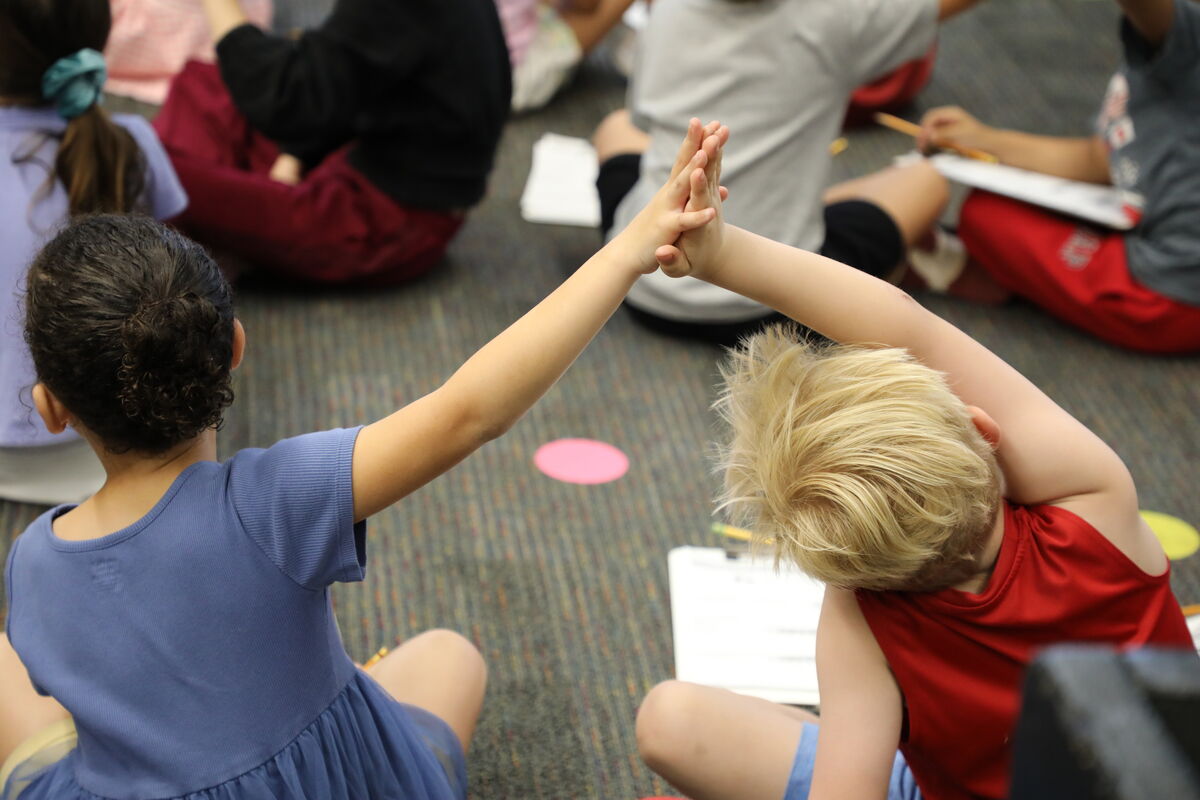 Students formed a pyramid with their team member, reinforcing their partnership.
Working with a Compañero
Each pair of students has a worksheet at their mesa with three challenges: log in and build the underwater robot, use a loop to make the robot go in the water and splash three times, and make the robot emerge from the water at the end of the program. After each challenge, students raise their hand for a teacher check.When parent helpers visit, they pair up with students at the tables, helping them read the building directions, sort their pieces, and troubleshoot when something doesn't quite work. Today, students introduced their parent helpers to the class as Señor or Señora, in Spanish, by name. The collaboration goal isn't just for the children. The whole room is structured around it.
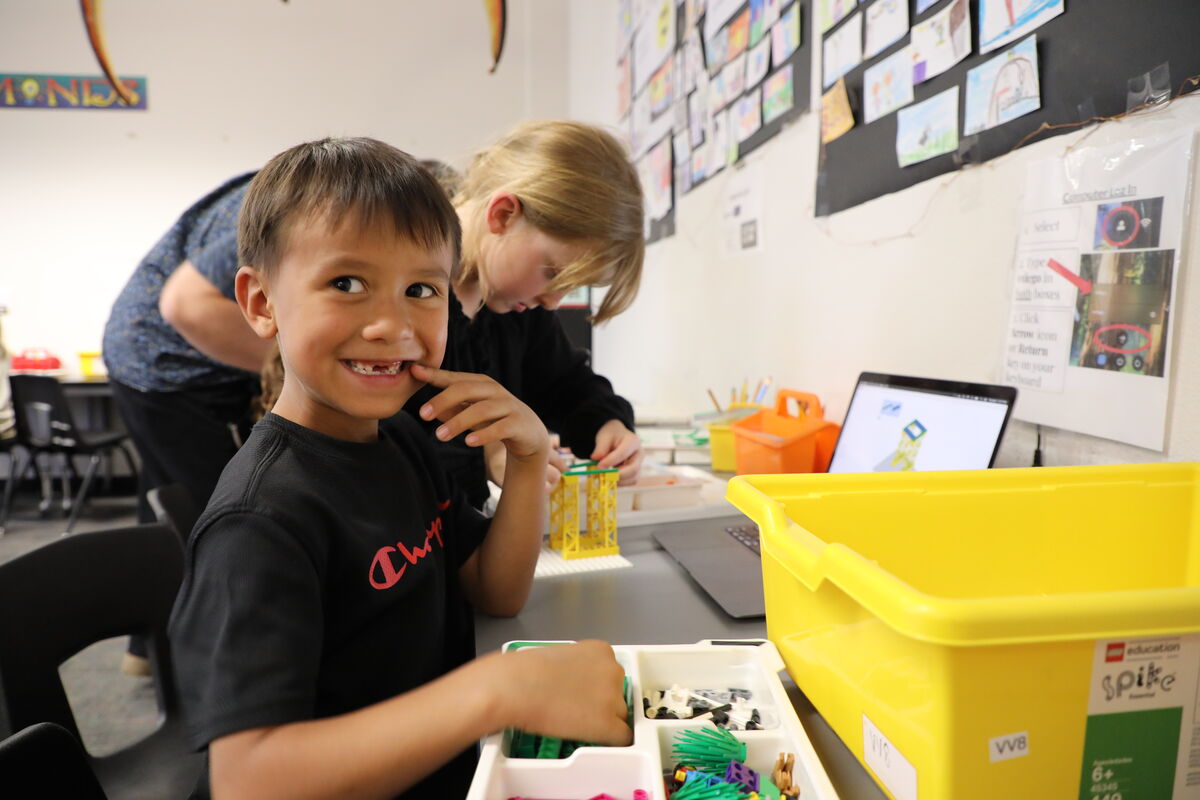
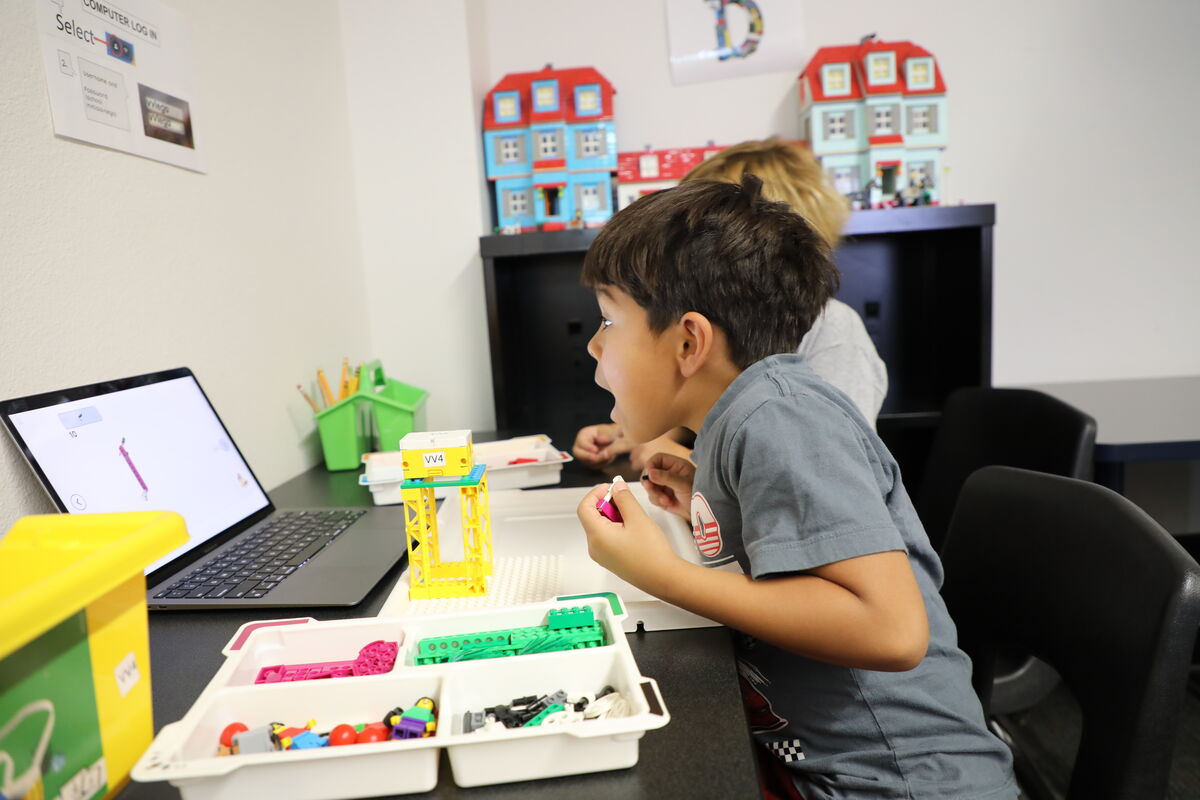 Students are fully engaged as they build a submarine and a giant squid.
Why This Matters
What looks at first like a fun lesson with a LEGO kit is, on closer examination, a layered teaching approach. First graders are learning to build and program robots, to use computational concepts like loops and sensors, to collaborate with a partner, and to operate in two languages at once. They are doing all of this while solving a problem that has a story attached: helping Maria explore the natural world.This is what Spanish immersion at Ventana Vista looks like in practice: rigorous academic content delivered in two languages, by a teacher who moves between them, with students who are picking up everything at once.
Thank you to Mr. M-C, to the parent volunteers who showed up to help, and to the first graders who are figuring it all out one clase at a time.
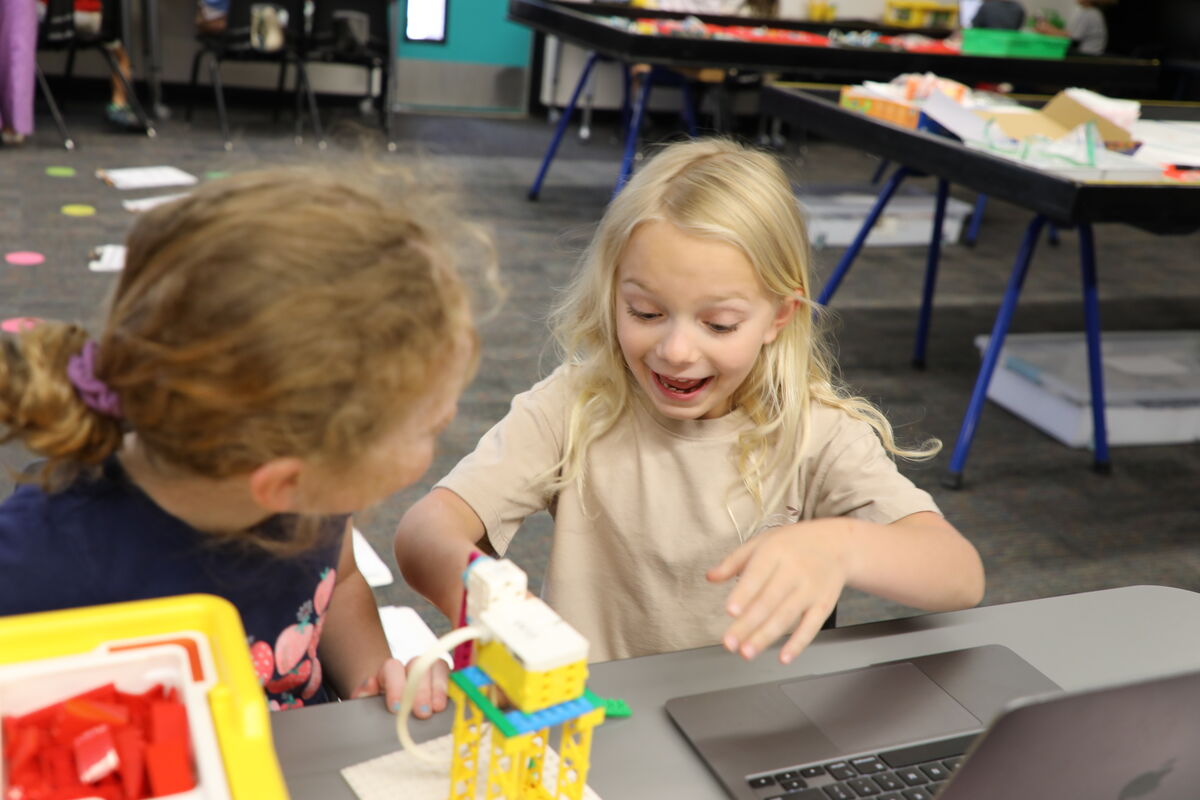 Students light up when they see how their submarine program works.