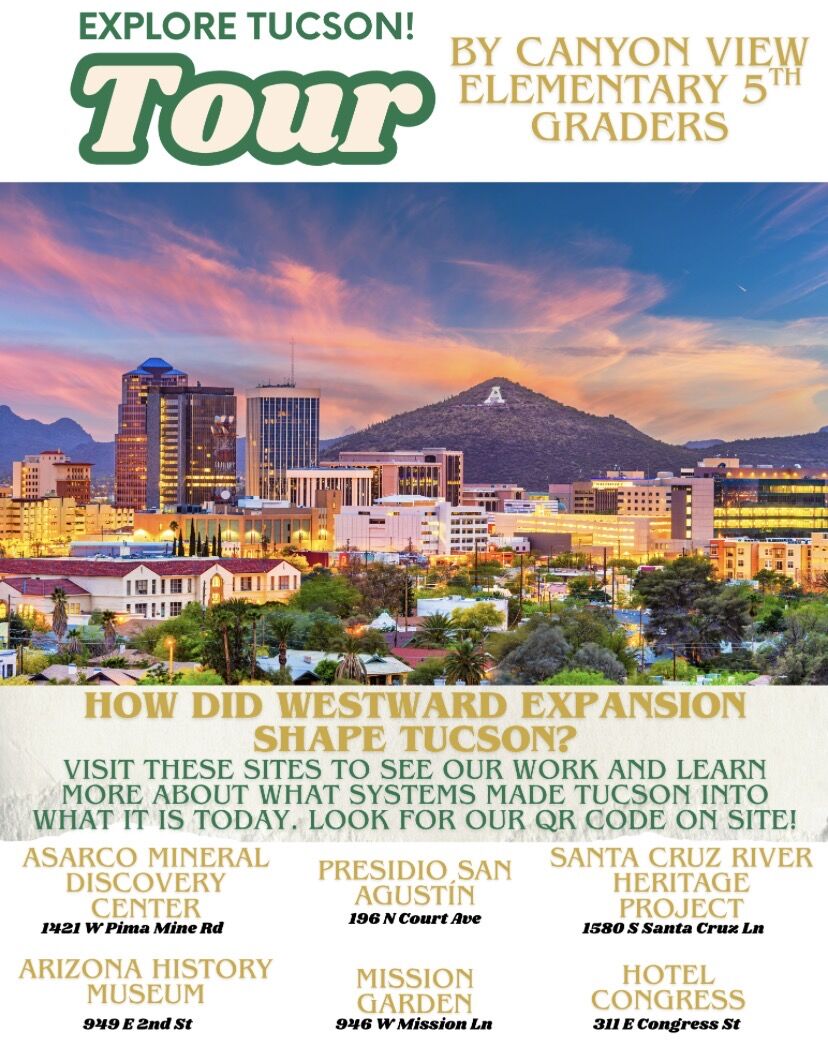
Take a Tour of Tucson's History Built by our Youngest Historians
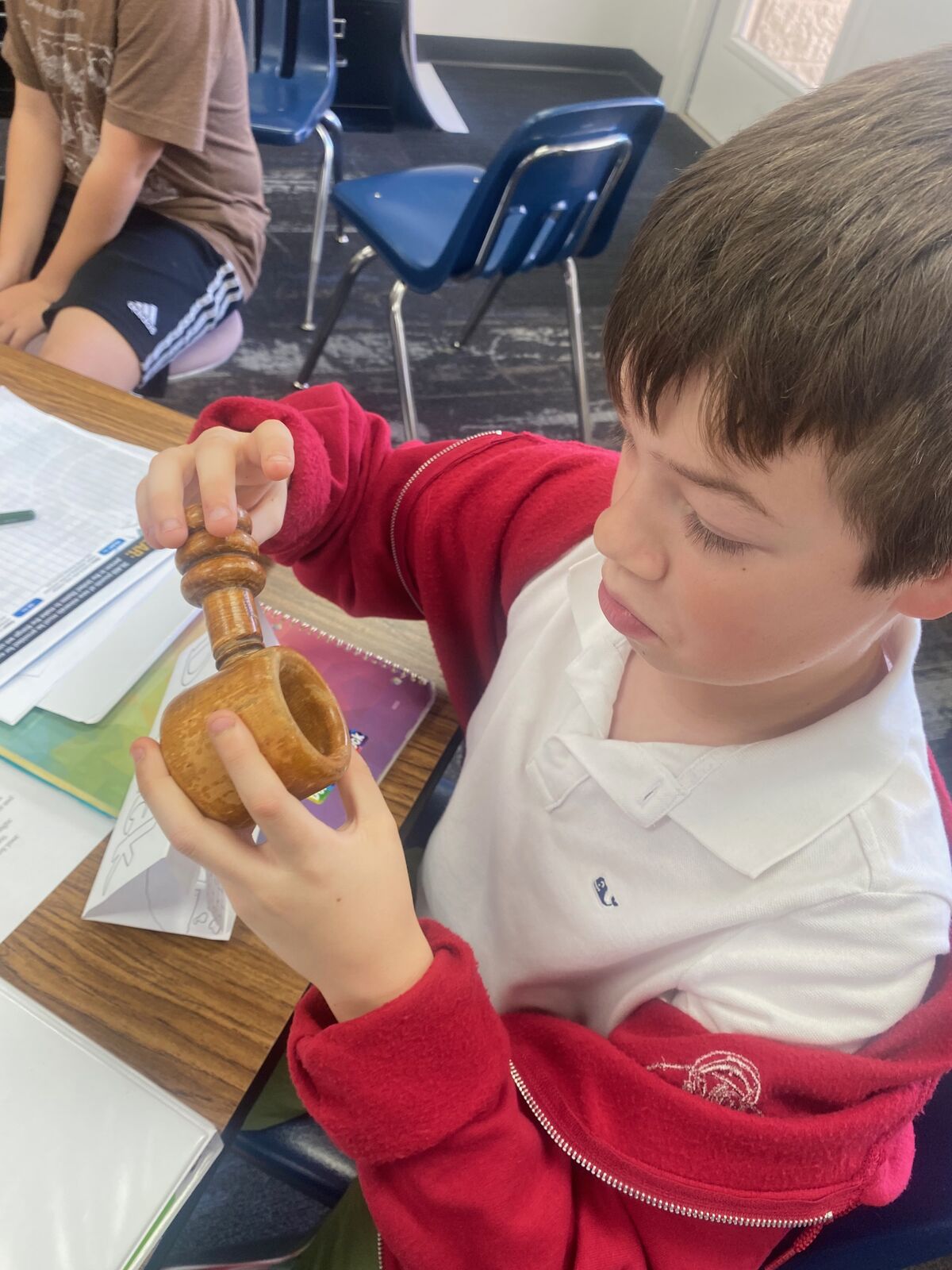
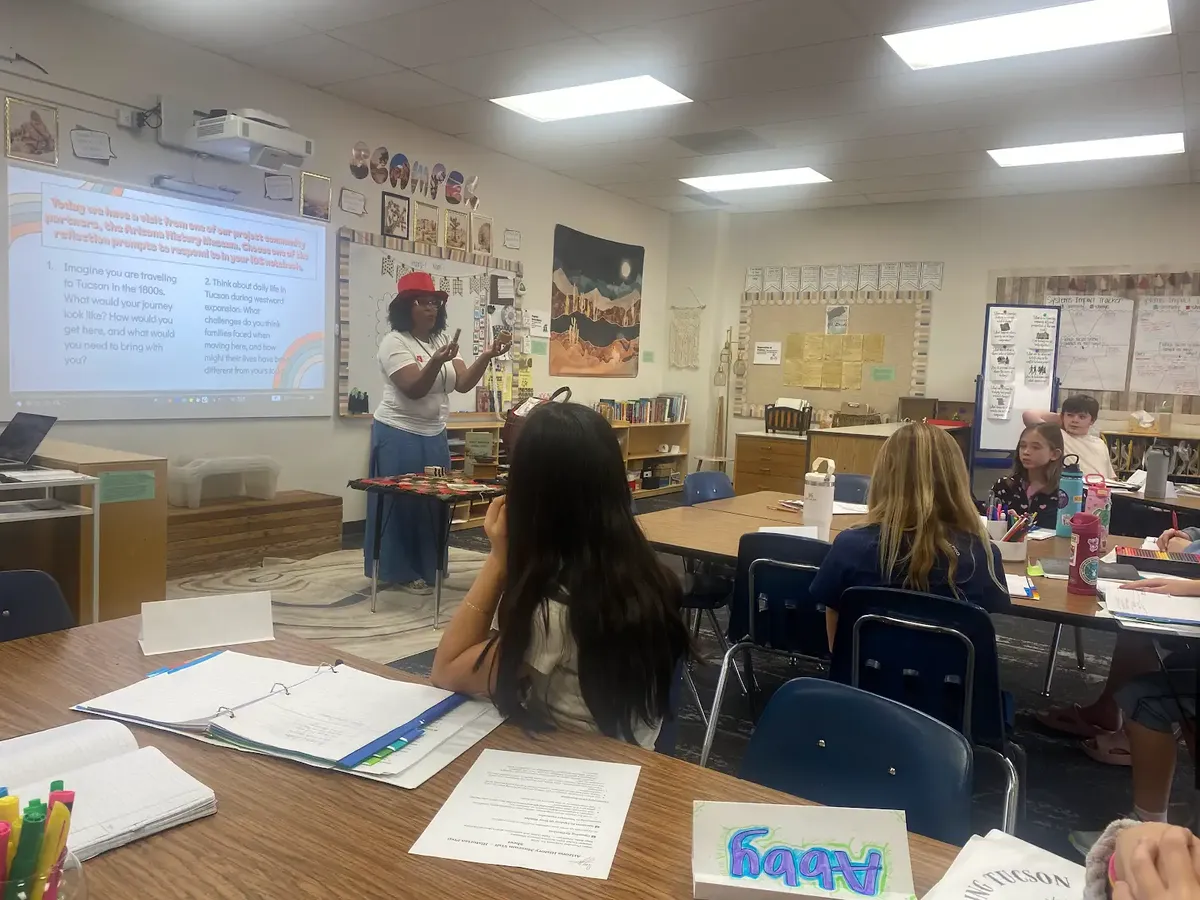
Derrick holds a wooden artifact in both hands, turning it slowly, studying the grain. It's from the Arizona Historical Society's collection, and it's older than the state of Arizona. Across the table, Naia examines another piece, brow furrowed, her historian binder open beside her. On the whiteboard, a reflection prompt reads: "Imagine you are traveling to Tucson in the 1800s. What would your journey look like? How would you get here, and what would you need to bring with you?"
This is a Tuesday afternoon in Mrs. Samantha Thompson's fifth grade IDS classroom at Canyon View Elementary School. And this is what deep learning looks like.
The Project
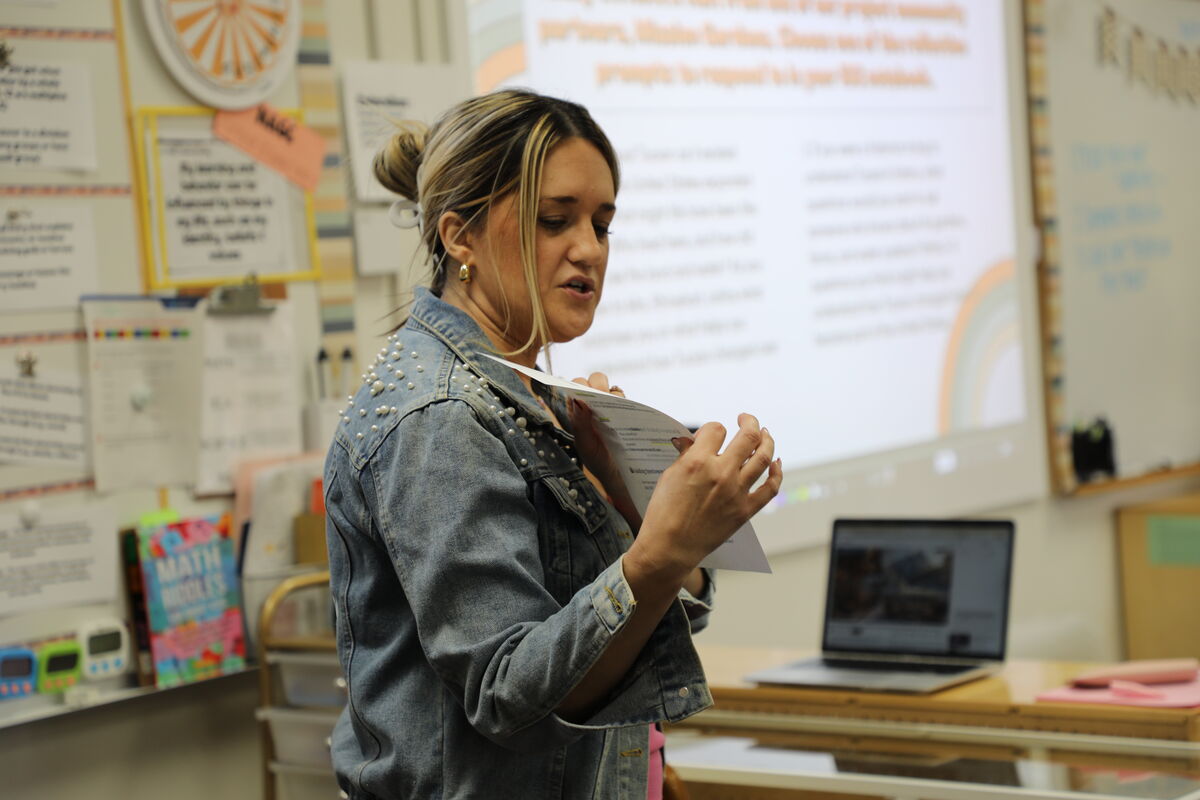
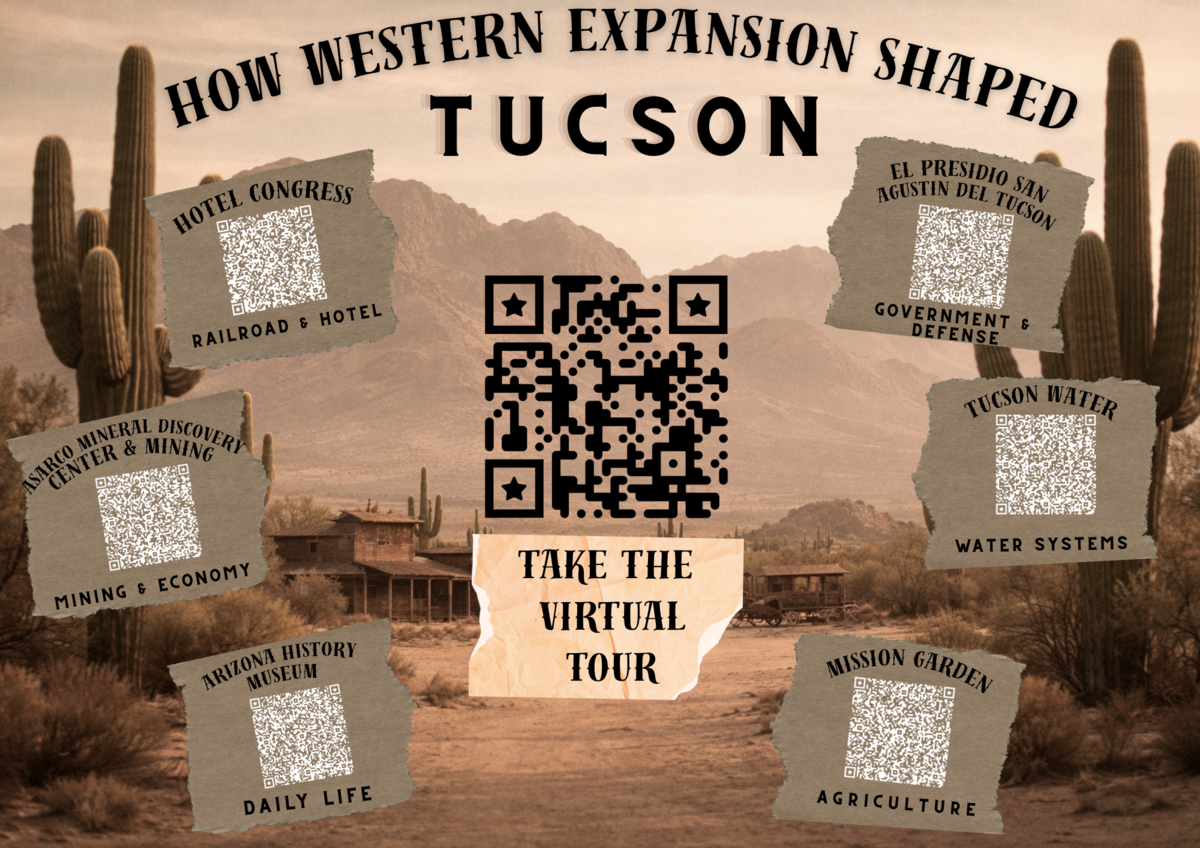
"Exploring Tucson: Students Trace the Paths of Expansion" asks students to step into the role of historians as they explore Tucson's history within the larger story of westward expansion. Over several months, students have researched local landmarks, examined primary sources, held artifacts, interviewed experts, and considered multiple perspectives on who built this city and at whose expense. Their final product: a public-facing city tour with student-created QR codes at real Tucson locations, featuring multimedia content and questions designed to prompt community members to think critically about how Tucson's growth was shaped by the arrival of settlers and the displacement of the people who were already here.
For Mrs. Thompson, the project grew out of something she noticed in her students early on. "My students were asking bigger questions than the constraints of our classroom were giving them space for," she says. "They weren't just curious about westward expansion, but how it impacted us specifically here in Tucson, and how systems like water, transportation, and government shaped people's lives." At a certain point, she realized she was the one limiting their complexity. "When I stepped back and gave them a real-world task with real audiences, they rose to it immediately. They didn't just handle the challenge, they needed it!"
 Twelve Partners, One Classroom
What makes this project extraordinary is the community that showed up to support it. Mrs. Thompson reached out to nearly a dozen organizations, and every one said yes.
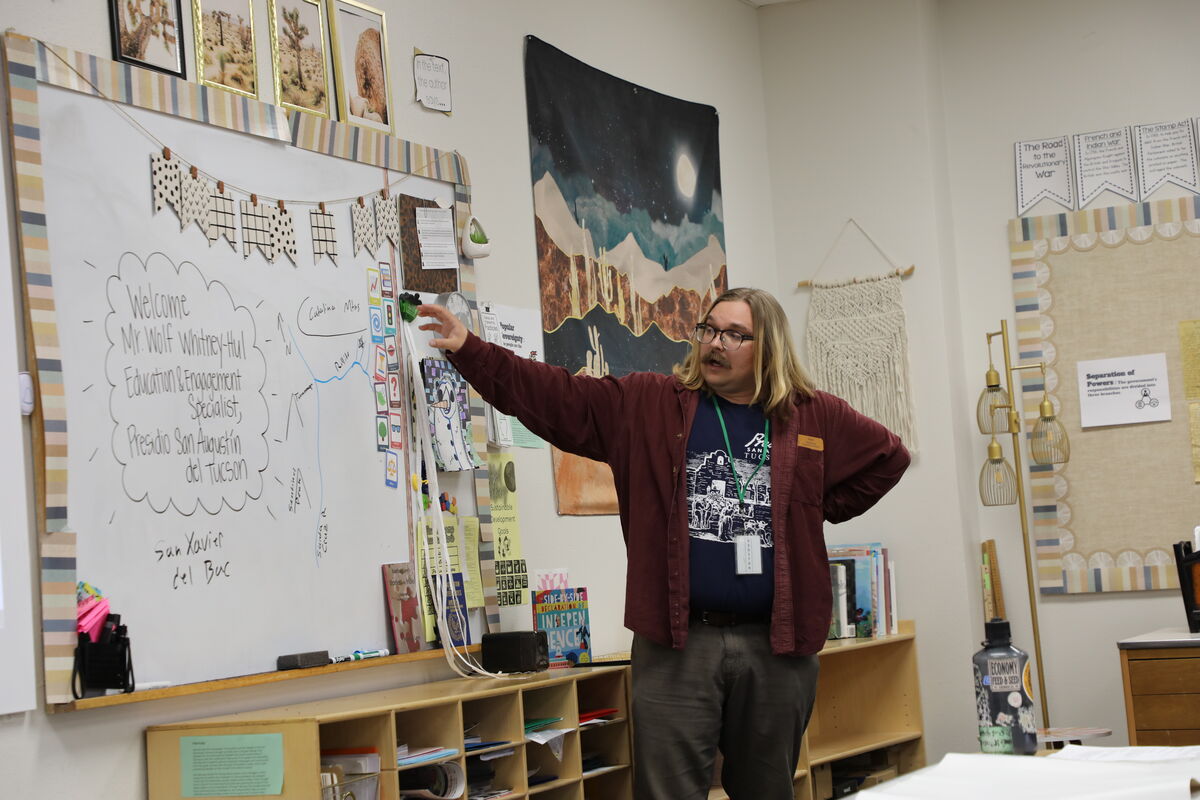
The Arizona Historical Society brought artifacts into the classroom, putting pieces of Tucson's past directly into students' hands. Mission Garden sent Abby Reinhart to explain how different cultures have grown food in Tucson across centuries, from indigenous gardens to Spanish gardens to a "tomorrow's garden" focused on sustainability. The Presidio San Agustín del Tucson Museum sent an archaeologist named Wolf to walk students through the Spanish colonization strategy and the construction of the fort that gave the city its shape. The Arizona History Museum prompted students to imagine daily life during westward expansion and the challenges families faced as they moved to the desert. Tucson Water, the Southern Arizona Transportation Museum, Hotel Congress, the University of Arizona Library, UA Special Collections, and the Pima County Library all contributed to student research and community engagement.
These weren't field trips. They were working sessions. Each visitor was formally cited as an interview source in the students' historian binders, with name, date, and role recorded alongside notes and observations.
Mrs. Thompson says the community response took her by surprise. "Honestly, I hoped for a few yeses. I didn't expect the level of enthusiasm we received." She sees it as a reflection of Tucson itself. "There's a real sense that history, culture, and resources here belong to everyone, and people want students to engage with that in meaningful ways. It also shows students that learning doesn't just live inside a classroom. That there are experts, stories, and opportunities all around them, and people are willing to open those doors."
The Historian Binder
Central to the project is the historian binder, a research portfolio that mirrors the work of professional scholars. Each binder contains tabbed sections for connections to westward expansion, community and civic questions, a running list of sources, notes, and observations, and reflections that ask students to synthesize what they've learned.
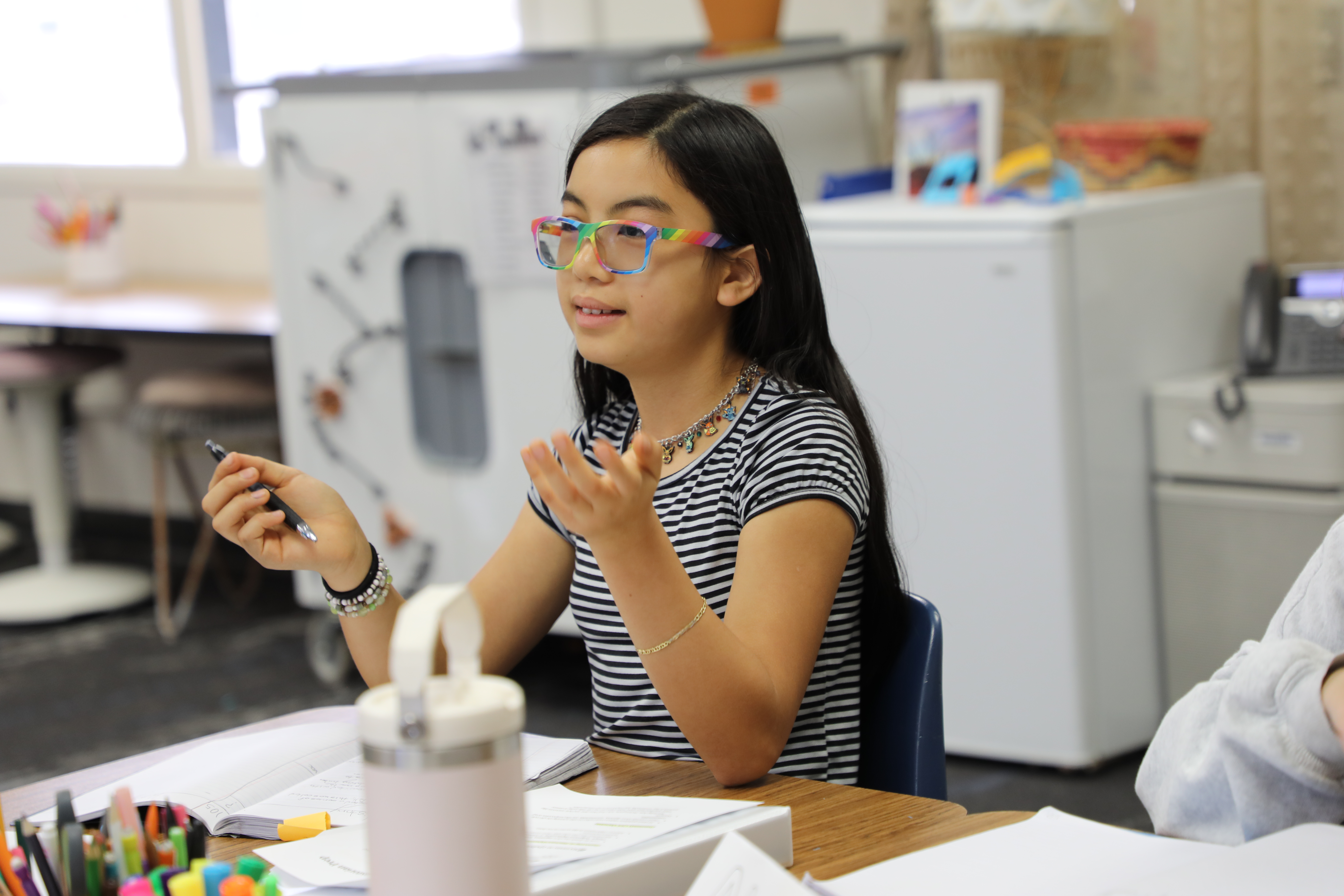
Before each visitor, Mrs. Thompson provides a "historian prep sheet" with guiding questions and space for students to set goals. After each visit, students reflect on what surprised them, what changed their thinking, and what new questions they have. Colored pencils and pens are out. This is not passive note-taking. It's active research.
When asked what she sees during those prep sessions that feels different from typical schoolwork, Mrs. Thompson doesn't hesitate. "The biggest difference is ownership. They're not asking questions because I told them to, they're asking because they genuinely want answers." She describes watching students think about their audience, refine their wording, build on each other's ideas, and anticipate follow-up questions. "It becomes a collaborative, intellectual process instead of a compliance task. They're also taking risks. They're willing to ask deeper, more complex questions because they know the conversation is real."
 Students Thinking Like Historians
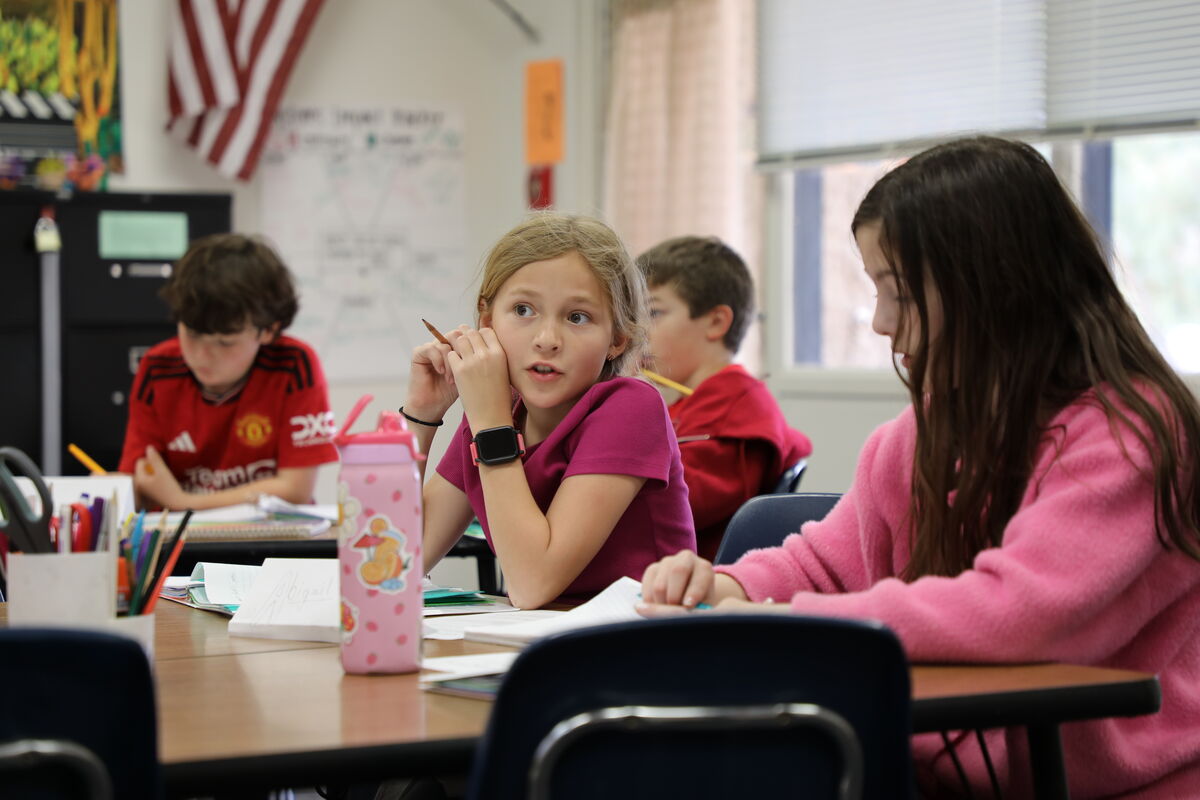
The quality of student thinking throughout this project has been striking. Before the Mission Garden visit, Mrs. Thompson asked students to reflect on what life might have looked like in Tucson before westward expansion. One student observed that "Tucson is a desert, which means it doesn't rain very much, so there would be less opportunity to plant crops and set up communities." Another described how settlers might have "dug a well down until they hit groundwater." Logan pointed out that desert trees store water internally, making them harder to use for building.
Cece asked whether agriculture in early Tucson was communal or individual, and whether it was paid or volunteer work. Another asked, "Did the people already living in Tucson dig the irrigation, or did the Americans?" During the Presidio visit, Veda raised a point that could have come from a graduate seminar: building a fort might have made the Tohono O'odham feel that the Spanish viewed them as hostile, even if they weren't, creating a cycle of defensiveness that didn't need to exist.
These are not rehearsed questions. They emerge from students trained to think about systems, power, and perspective.
Mrs. Thompson has watched that kind of thinking develop over the course of the project. "At the beginning of the project, a few students tended to focus on the facts, what happened, when it happened, but maybe struggled to explain why it mattered," she says. "As we worked through interviews and primary sources, I watched all of the students start making connections across systems. They began asking questions like, 'Wait, if water access changed, wouldn't that affect where people lived and what jobs they had?'" She calls that shift from isolated facts to interconnected thinking the heart of the project. "By the end, they weren't just reporting information; they were explaining Tucson like a system."
 Multiple Perspectives
The project's most powerful thread is its insistence on multiple perspectives. Westward expansion is often taught as a story of growth and progress. This project asks students to consider growth for whom and at whose expense.
Students learned from Mission Garden that wheat is not native to Tucson and was brought by the Spanish, who "didn't think indigenous foods were good for eating." From the Presidio Museum, they learned that Spanish colonization occurred in two phases: first, missions sought to convert indigenous people, then presidios sought to assert military control. From the Arizona Historical Society, they handled artifacts and imagined the lives of the people who used them. At every turn, the same question surfaced: whose story is being told, and whose is missing?
 The Public Tour
Soon, these students will put everything they've learned in front of the public. Their QR code tour will be installed at real Tucson landmarks. Anyone with a smartphone can scan a code to experience student-created multimedia content: the site's history, the multiple perspectives that shaped it, and questions designed to prompt visitors to think critically about the city they live in.
For a ten-year-old, knowing that strangers will experience something you created changes everything about how you approach the work.
Mrs. Thompson hopes the impact extends beyond her classroom. "I want people to see that this isn't just a school project, it's students contributing to a larger story about their community," she says. "Ideally, someone scans a code and thinks, 'I've lived here for years and never connected these ideas this way,' or 'I didn't realize students could think this deeply about their city.' If it sparks curiosity, pride, or even just a moment of reflection, then the project has done exactly what it was meant to do."
Now it's your turn to see how Canyon View fifth graders tell our city's story of Western Expansion. Take our Tour of Tucson's History: Experience "Exploring Tucson: Students Trace the Paths of Expansion" here.
Next Up: Students will present their work to the Pima County Board of Supervisors on April 21.